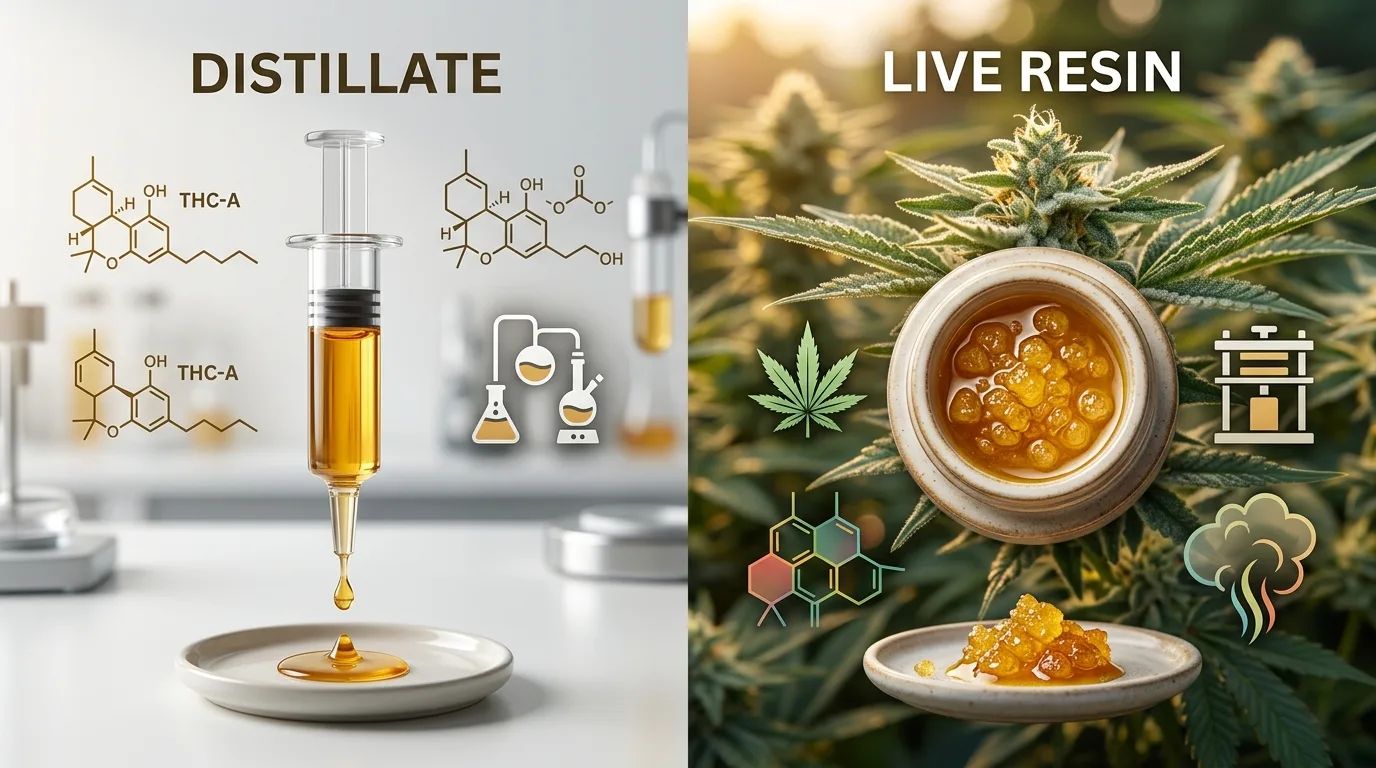
You're standing in front of a vape cart display or browsing a concentrate menu, and the options are overwhelming. Distillate pens at $30, live resin carts at $60, and you're wondering: what exactly am I paying for? More importantly, which one actually delivers the experience you're looking for? If you've ever felt lost choosing between distillate and live resin, you're not alone. These two concentrates dominate the Canadian cannabis market, but they couldn't be more different in how they're made, how they taste, and how they make you feel.
Understanding the difference between distillate and live resin isn't just about cannabis geek knowledge. It's about getting the right product for your specific needs. Whether you're filling vape cartridges, making edibles at home, or looking for the most flavourful dab experience, the concentrate you choose dramatically affects your results. This guide breaks down everything you need to know to make an informed decision, from extraction methods to real-world applications, so you can stop guessing and start enjoying exactly what you're after.
What Is Cannabis Distillate and How Is It Made?
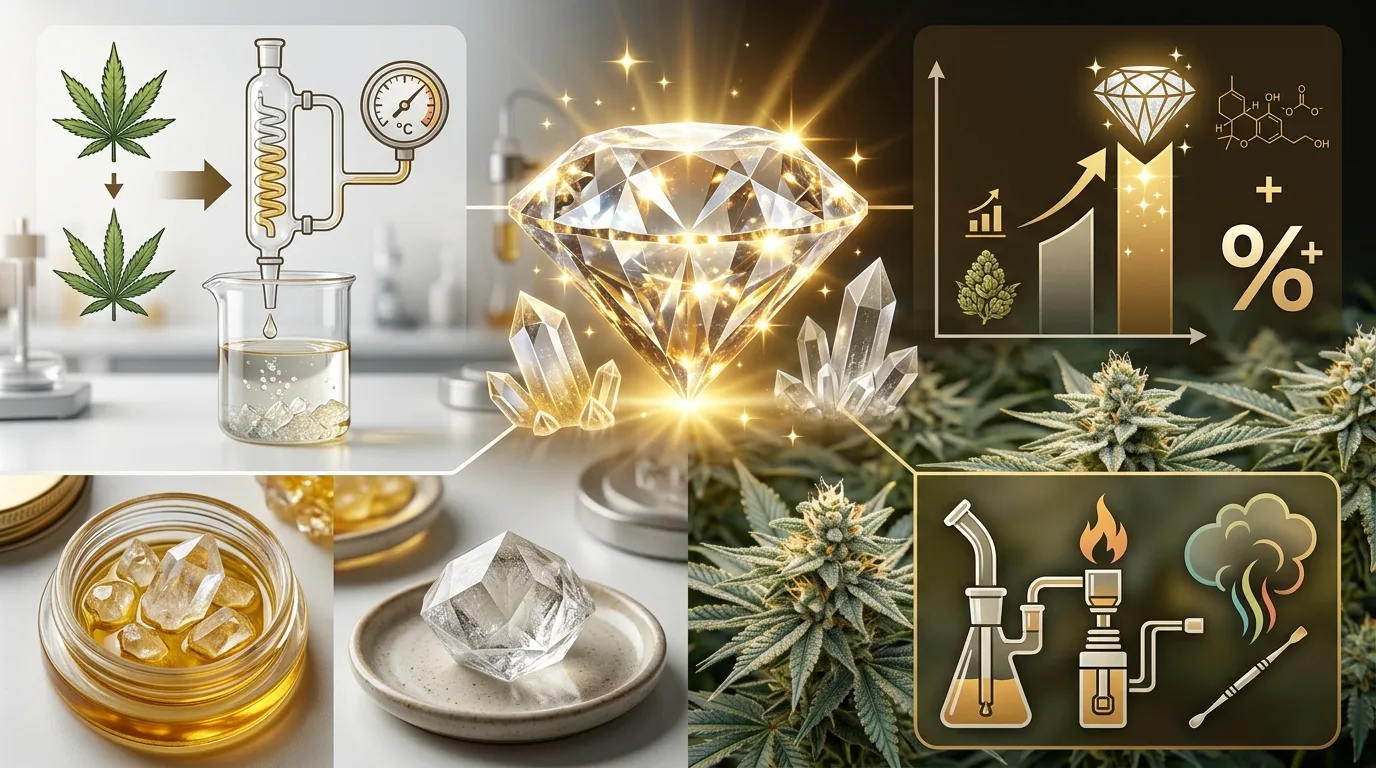
Cannabis distillate represents the purest form of THC or CBD you can buy. Through a multi-stage refinement process, extractors remove everything except the desired cannabinoid, resulting in a thick, translucent oil that typically tests between 85-99% pure. Think of it as the vodka of cannabis concentrates: clear, potent, and stripped of most distinguishing characteristics beyond raw potency.
The distillation process begins with a crude cannabis extract, often made using ethanol or hydrocarbon solvents. This initial extract contains cannabinoids, terpenes, fats, lipids, and plant waxes. Through a process called winterization, fats and waxes are frozen and filtered out. The remaining oil then undergoes decarboxylation, where heat activates the cannabinoids by converting THCA into THC.
The final step happens in specialized equipment called a short-path distillation apparatus. Under vacuum pressure and precise temperature control, the extract is heated until cannabinoids vapourize, travel through glass pathways, and condense back into liquid form in a separate collection vessel. Because different compounds vapourize at different temperatures, this process separates THC from everything else, including the terpenes that give cannabis its flavour and aroma.
The Pros and Cons of Distillate
Distillate's biggest advantage is consistency. Every batch delivers predictable potency without variation in flavour or effects. For manufacturers making vape cartridges or edibles, this standardization is invaluable. You know exactly how much THC you're working with, and there's no cannabis taste to overpower your carefully crafted flavour profiles.
The lack of flavour cuts both ways. While some consumers appreciate the neutral taste, cannabis connoisseurs often find distillate one-dimensional. Without terpenes, you miss out on the entourage effect, where cannabinoids and terpenes work synergistically to create more nuanced experiences. The high from pure distillate tends to feel more straightforward and less complex than full-spectrum concentrates.
Price-wise, distillate typically costs less than live resin. The extraction process is more scalable, and producers can use trim and lower-grade flower as starting material since the final product strips away most plant characteristics anyway. For budget-conscious consumers or those making edibles in bulk, distillate offers excellent value per milligram of THC.
What Is Live Resin and Why Does It Cost More?
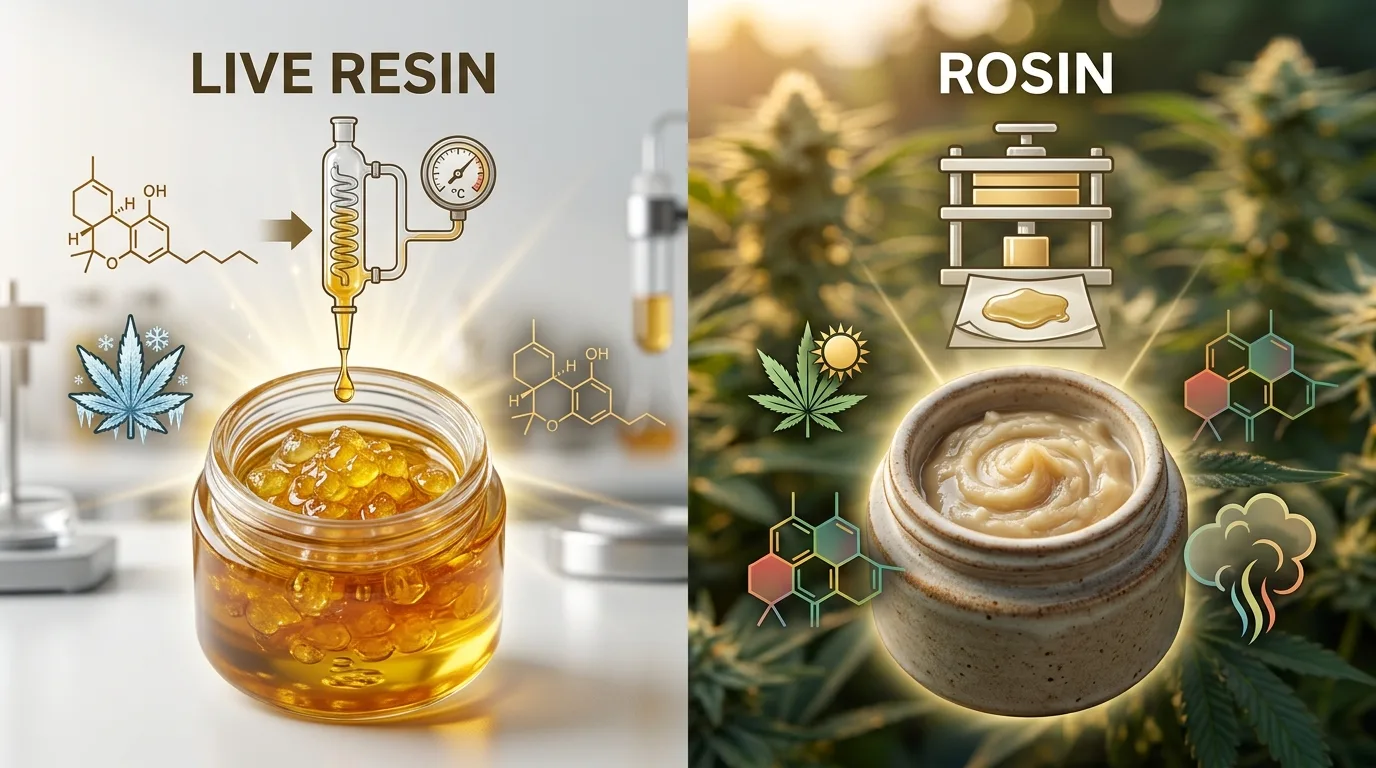
Live resin takes a completely different approach to concentrate production. Instead of refining cannabis down to a single pure compound, live resin aims to capture the full sensory profile of the living plant. The process begins the moment cannabis is harvested: rather than drying and curing the flower, it's immediately flash-frozen to preserve volatile terpenes that would otherwise evaporate during traditional processing.
This frozen plant material is then extracted using hydrocarbon solvents like butane or propane at extremely cold temperatures. The low-temperature extraction preserves delicate terpene compounds that give each strain its distinctive aroma and flavour. The result is a concentrate that contains not just cannabinoids, but a rich spectrum of terpenes that mirror the original plant's profile.
Live resin typically contains 60-90% cannabinoids, with the remaining percentage consisting of terpenes and other plant compounds. While this means lower THC percentages than distillate on paper, many consumers report more satisfying and complex effects. The terpene content in quality live resin can reach 10-15%, compared to essentially zero in raw distillate.
The Flavour and Effect Difference
The taste gap between distillate and live resin is dramatic. Distillate on its own has virtually no flavour, which is why most distillate vape cartridges contain added terpenes (either cannabis-derived or botanical). Live resin bursts with the authentic taste and smell of the original strain. When you vapourize quality live resin, you'll taste everything from citrus and pine to earth and diesel, depending on the cultivar.
Effects tell a similar story. Distillate produces a clean, heady high that emphasizes THC's psychoactive properties. It's effective for straightforward goals like pain relief or sleep, but the experience lacks the subtlety that cannabis enthusiasts prize. Live resin, with its preserved terpene profile, delivers what many describe as a more "full-bodied" high that better represents the strain's intended character.
Research into the entourage effect suggests that terpenes don't just add flavour. Compounds like myrcene, limonene, and pinene interact with cannabinoids to modulate effects, potentially enhancing therapeutic benefits and creating strain-specific experiences. This is why experienced consumers often prefer live resin despite its higher cost and lower THC percentage. For a deeper understanding of how different consumption methods affect your body, check out this clinical guide to inhaled versus ingested cannabis.
Vape Cartridges: Which Concentrate Wins?
Vape cartridges represent the most popular use case for both distillate and live resin, but your choice should depend on what you value most. Distillate cartridges dominate the market for good reasons: they're affordable, consistent, and produce huge clouds with minimal clogging. The thick viscosity of distillate works perfectly in cartridge hardware without requiring cutting agents.
Most distillate vape cartridges you'll find contain added terpenes to restore flavour. Some manufacturers use cannabis-derived terpenes extracted from the same strain, while others use cheaper botanical terpenes from plants like lavender or citrus fruits. The quality varies wildly. Premium distillate carts with cannabis-derived terpenes can approach live resin in flavour complexity, while budget options often taste artificial or overly sweet.
Live resin cartridges cost 30-100% more than distillate carts, but they deliver authenticity that artificial terpenes can't match. The high-terpene content means intense flavour from the first puff to the last. However, live resin's thinner consistency sometimes causes leaking or clogging in lower-quality hardware. Always look for cartridges specifically designed for live resin if you're going this route.
Best Practices for Vaping Each Type
Distillate cartridges are forgiving. They work well at higher temperatures and can handle aggressive draws without burning. Most users find sweet spots between 3.2-3.8 volts on variable voltage batteries. The lack of terpenes means there's less to degrade with heat, so distillate carts maintain consistent flavour throughout their lifespan.
Live resin demands more finesse. Lower temperatures (2.4-3.2 volts) preserve the delicate terpene profiles that justify the premium price. High-heat vaping burns off terpenes quickly, leaving you with an expensive cartridge that tastes like burnt distillate. Take slower, gentler draws to avoid clogging and get the most flavour. If you're exploring vaping options, consider checking out products like the Drizzle Factory 2g THC Vape Cartridges which offer quality options for both concentrate types.
Making Edibles: When Distillate Is King
For homemade edibles, distillate is nearly impossible to beat. It's already activated (decarboxylated), so you can add it directly to recipes without any additional processing. This is huge. Traditional edible-making requires decarbing flower in your oven, infusing it into butter or oil, and straining out plant material. With distillate, you simply heat it slightly to reduce viscosity, mix it into your ingredients, and you're done.
The flavourless nature of distillate becomes an advantage in edibles. You can make gummies, chocolates, or baked goods without any cannabis taste interfering with your flavours. Professional edible manufacturers almost exclusively use distillate for this reason. The precise THC content also makes dosing straightforward. If you're working with 90% THC distillate, you know that 1 gram contains 900mg of THC, making it simple to calculate exact doses per serving.
Live resin can technically be used for edibles, but it's wasteful. You're paying premium prices for terpenes that will mostly evaporate during cooking or get masked by food flavours anyway. The one exception is low-heat or no-bake recipes where you want a subtle cannabis flavour. Some craft edible makers use live resin in chocolate or caramel to add an authentic weed taste, but this remains niche.
Dosing and Potency Calculations
Distillate's consistent potency makes dosing math simple. A standard 1-gram syringe of 90% THC distillate contains 900mg total THC. If you're making 30 gummies, each piece gets 30mg. No guesswork, no variation between batches. This reliability matters enormously when you're making edibles for yourself or sharing with friends who have different tolerance levels.
With live resin, you're working with variable cannabinoid percentages (typically 60-85%) and you lose some terpenes to evaporation during any heating process. While you can still calculate doses based on lab-tested potency, there's more room for error. Most home edible makers who want full-spectrum effects use RSO (Rick Simpson Oil) or FECO (Full Extract Cannabis Oil) instead, which offer better value than live resin for ingested applications. To better understand how THC and CBD work differently in your body, explore this guide on what medical research says about cannabis and your body.
Dabbing and Concentrate Consumption: Where Live Resin Shines
If you're using a dab rig, e-nail, or dedicated concentrate vapourizer, live resin is where your money should go. The entire point of these consumption methods is experiencing the full flavour and effect profile of cannabis concentrates, and live resin delivers this better than any other widely available concentrate type.
Dabbing distillate isn't wrong, but it's like ordering a top-shelf whisky and mixing it with cola. The high-heat vapourization of a proper dab brings out all the complex terpene flavours in live resin, creating an aromatic experience that distillate simply can't match. Each strain of live resin produces distinctly different tastes and effects, while distillate dabs feel largely interchangeable.
The lower viscosity of live resin also works better in certain consumption devices. Nectar collectors, portable dab pens, and e-nails all perform optimally with concentrates that have some terpene content to reduce stickiness. Pure distillate can be almost too thick, requiring higher temperatures that defeat the purpose of low-temp flavour chasing.
Temperature and Technique Considerations
Live resin dabs taste best at lower temperatures than traditional wax or shatter. Most connoisseurs target the 450-550°F range (230-290°C) rather than the 600-700°F common for other concentrates. These lower temps preserve terpenes while still fully vapourizing cannabinoids, creating smooth, flavourful hits that showcase each strain's unique profile.
Distillate, if you're dabbing it, can handle higher heat without degrading since there are no terpenes to burn off. Some users actually prefer the cleaner, less cough-inducing nature of distillate dabs, especially when medicating in public or situations where strong cannabis odours are undesirable. The vapour from distillate is nearly odourless compared to the pungent clouds produced by live resin.
Price, Value, and When Each Makes Sense
In the Canadian market, distillate typically costs $15-30 per gram when purchased in bulk or as part of vape cartridges. Live resin runs $40-80 per gram depending on quality and brand. That's double to triple the price, which begs the question: is live resin worth the premium?
The answer depends entirely on your use case. For making edibles in bulk, distillate offers unbeatable value. You're getting the highest concentration of activated THC at the lowest price, and the missing terpenes don't matter in most edible applications. A budget-conscious consumer making cannabutter or infused coconut oil should always choose distillate over live resin.
For vaping and dabbing, the calculation gets more personal. If you're primarily seeking effects rather than flavour, distillate cartridges with quality added terpenes offer excellent value. But if cannabis consumption is a sensory experience for you, where taste and aroma matter as much as potency, live resin's premium is justified. Think of it like wine: there's nothing wrong with a $12 bottle for cooking, but you probably want something better for sipping.
Budget Shopping Strategies
Smart consumers don't pick one type exclusively. Keep distillate on hand for edibles and budget-conscious sessions where effects matter more than experience. Invest in live resin for special occasions, trying new strains, or when you want the best possible flavour from your vape or dab rig. Many Ottawa residents balance their cannabis budget this way, buying distillate in bulk during sales while splurging on small amounts of premium live resin for variety. For more budget-conscious shopping tips, read our guide on buying cheap weed in Ottawa without sacrificing quality.
Watch for bulk deals on distillate syringes, which often drop to $10-15 per gram when buying 5-10 units. This is perfect for edible makers or people who refill their own vape cartridges. Live resin rarely sees the same discount depth, but you can find better values on slightly older batches where terpene degradation has begun but the product remains perfectly usable.
Storage, Shelf Life, and Terpene Degradation
Distillate is remarkably stable. Stored in a cool, dark place, it can last 18-24 months with minimal potency loss. The lack of terpenes means there's less to degrade, and THC itself is quite stable when protected from light, heat, and oxygen. Many consumers keep distillate syringes for months without noticing any quality decline.
Live resin is more delicate. Those precious terpenes that create its superior flavour are volatile compounds that degrade over time. Even under ideal storage conditions (refrigerated, sealed, kept from light), live resin begins losing terpene intensity after 6-12 months. You'll notice the flavour becoming less vibrant and effects feeling less nuanced as the terpene profile fades.
For this reason, buy live resin in quantities you'll use within a few months. Unlike distillate, which you can stock up on during sales, live resin is best purchased fresh and consumed relatively quickly. Check packaging dates when possible and prioritize newer batches. The potency remains, but the experience that justifies the premium price diminishes with age.
Proper Storage Techniques
Store both concentrates in airtight containers away from direct light. Distillate does fine at room temperature, but refrigeration extends shelf life for both types. Live resin should always be refrigerated if you're keeping it longer than a month. Let refrigerated concentrates warm to room temperature before opening containers to prevent condensation from introducing moisture.
Silicone containers work well for live resin, while distillate is typically sold in syringes or glass jars. Avoid leaving concentrates in hot cars or sunny windowsills. The degradation from heat exposure is permanent. Properly stored distillate and live resin maintain quality much longer than flower, making them better options for less-frequent consumers who want their purchase to last.
Making Your Choice: A Decision Framework
Choose distillate when your priority is affordability, precise dosing, or making edibles. It's the right call for consumers who want maximum THC per dollar, don't care much about flavour nuances, or need neutral-tasting concentrate for infusions. Distillate makes sense for daily drivers, budget shoppers, and anyone making cannabis products at home.
Pick live resin when flavour, terpene profiles, and authentic strain experiences matter most. It's worth the premium for special occasions, trying new strains, low-temperature dabbing, or when you want your vape cartridge to taste like actual cannabis rather than artificial flavourings. Live resin suits connoisseurs, flavour chasers, and consumers who view cannabis as an experience rather than just medication.
Many regular consumers keep both on hand, using each for different purposes. This balanced approach gives you maximum flexibility without breaking the bank. Make edibles with affordable distillate, enjoy weekend dabs with flavourful live resin, and match your concentrate choice to the situation. There's no single right answer, only the right product for your specific needs at any given moment. For convenient access to both types of concentrates in Ottawa, explore same-day delivery options from an Indigenous-owned cannabis service that's been serving the community since 2018.
Yes, mixing distillate with live resin is increasingly popular. Adding 10-30% live resin to distillate boosts flavour and terpene content while keeping costs lower than pure live resin. This blend is common in mid-tier vape cartridges that want better taste than pure distillate without full live resin pricing. Some consumers mix them manually when refilling cartridges to customize potency and flavour ratios.
The quality varies based on starting material and added terpenes. Cheap distillate might come from trim or lower-grade flower and use botanical terpenes, while premium distillate uses top-shelf source material and cannabis-derived terpenes. Hardware quality also affects price. Better cartridges use ceramic coils and leak-proof designs that justify higher costs compared to basic cartridges that frequently clog or leak.
Not necessarily in terms of raw THC potency. Distillate often contains more total THC by percentage. However, many users report that live resin produces more satisfying, complex effects due to the entourage effect of preserved terpenes interacting with cannabinoids. The quality of the high may feel different and potentially more pronounced, even if lab-tested THC percentages are lower than distillate.
You can, but it's not recommended for most applications. Live resin needs decarboxylation before use in edibles, which means heating it and potentially losing the terpenes you paid premium prices for. The cannabis flavour may also be stronger than desired in many recipes. Distillate is purpose-built for edibles, already activated, flavourless, and much more cost-effective for cooking and baking projects.
Check the packaging for transparency about extraction methods and terpene sources. Real live resin cartridges should specify flash-frozen starting material and list strain-specific terpene profiles. Price is also a clue - genuine live resin cartridges rarely sell for under $40-45. If a cart claims live resin at distillate prices, it's likely distillate with added terpenes. Reputable brands provide lab testing that shows both cannabinoid and terpene percentages.
It depends on the specific medical need. Patients requiring precise, consistent THC or CBD dosing typically prefer distillate for its predictable potency and neutral flavour. Those treating conditions like chronic pain, inflammation, or anxiety might benefit more from live resin's full-spectrum profile, as research suggests terpenes contribute to therapeutic effects. Consult with healthcare providers familiar with cannabis medicine to determine which concentrate type aligns with your treatment goals.
The Bottom Line: Match Your Concentrate to Your Consumption Method
The distillate versus live resin debate isn't about one being objectively better than the other. These concentrates serve different purposes, excel in different applications, and appeal to different consumer priorities. Understanding their distinct characteristics empowers you to make smarter purchasing decisions based on how you actually consume cannabis rather than marketing hype or arbitrary preferences.
Distillate delivers maximum potency at minimum cost with unmatched versatility for edibles and infusions. Live resin preserves the authentic sensory experience of cannabis strains with flavour and effects that justify premium pricing for those who value the difference. Most experienced consumers recognize that both have their place in a well-rounded cannabis toolkit.
Whether you're filling vape cartridges, preparing edibles, or loading your dab rig, choosing the right concentrate transforms your experience. Stop overpaying for live resin when distillate would serve your needs perfectly, and stop settling for flavourless distillate when the situation calls for the full-spectrum excellence of live resin. Match your concentrate to your method, your budget, and your expectations, and you'll get exactly what you're after every single time.
Ready to Explore Premium Concentrates?
Browse our selection of quality distillate and live resin products with same-day delivery across Ottawa and Gatineau. Whether you're stocking up on distillate for edibles or treating yourself to flavourful live resin cartridges, we've got you covered with verified quality and unbeatable convenience.
Shop Concentrates Now